







Why Hotels and Offices Are Switching to Curved LED Front Desk Displays
Why more hotels and corporate offices are installing curved LED displays at their front desks — and what it does for first impressions.
Walk into any upscale hotel lobby today and the front desk is where the brand makes its first real statement. For years, that statement came from materials — marble, wood paneling, a logo on the wall. But a growing number of hotels, corporate headquarters, and co-working spaces are replacing static reception branding with something else entirely: a curved LED front desk display.
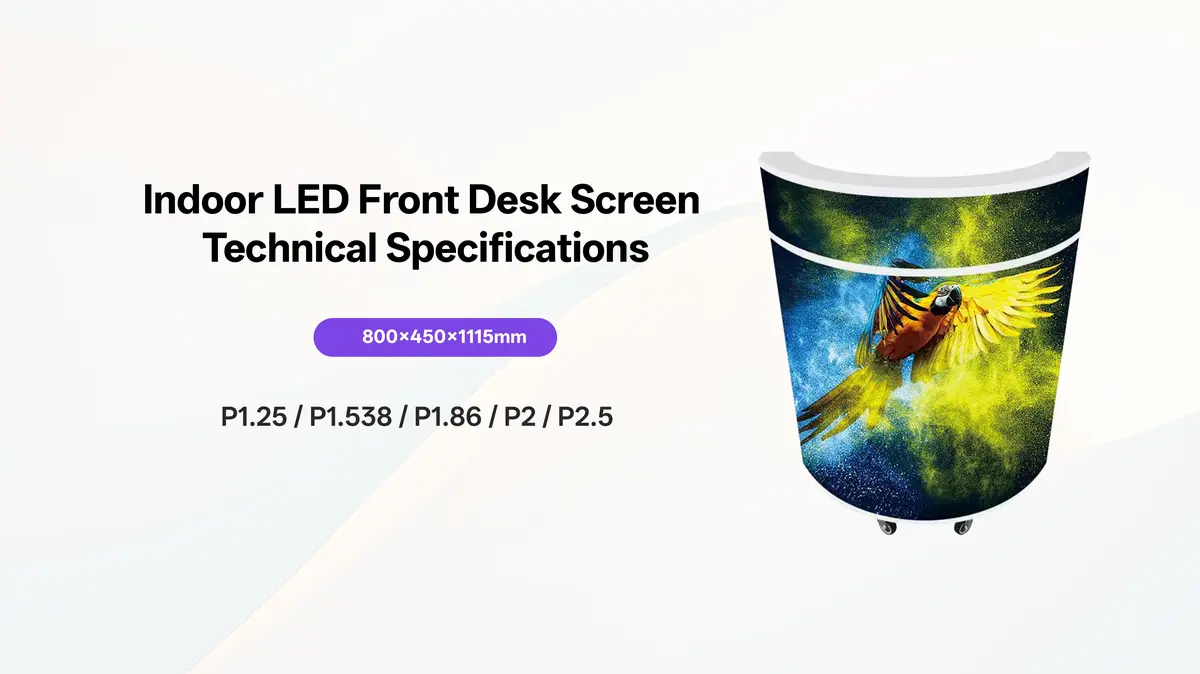
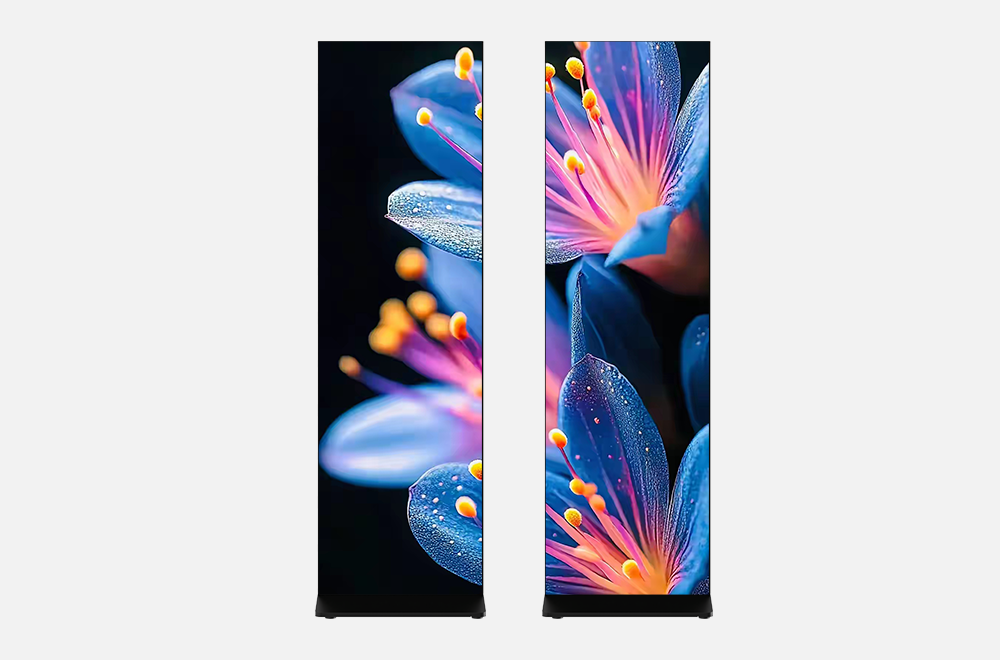
Not a flat screen mounted on a wall. Not a digital sign hung overhead. A 47.5-kilogram semi-circular display that wraps around the reception counter, standing about as tall as an average desk partition, and running continuous content — brand videos, welcome messages, wayfinding, real-time updates — all day, every day.
Here is what is driving the shift, and what operators should know before making the investment.
The front desk is advertising space — treat it like one
The reception counter occupies a unique position in any commercial space. It is the first thing people see, the last thing they pass on the way out, and the one spot where every visitor spends at least thirty seconds standing. From a real estate perspective, that surface area is prime advertising inventory that most businesses leave empty or cover with a printed sign that goes out of date the day after it is ordered.
A curved LED display turns that dead space into a dynamic brand channel. Instead of a static logo, guests see the property's best photography. Instead of a printed rate sheet, they see current promotions. Instead of a dusty welcome sign, they see personalized greetings pulled from the reservation system.
Hotels that have made the switch report that guests stop and look — actually stop walking, turn their heads, and read the screen. That does not happen with acrylic signage.
Why curved matters more than flat
A flat screen mounted behind the desk forces the layout. The counter has to be set back. The screen has to sit at the right height. Viewing angles become a problem for guests standing at either end of the reception counter.
The curved semi-circular design solves this physically. It wraps around the front desk, so every point along the counter has a good viewing angle. The 1058mm width and 1115mm height fit the proportions of a standard reception counter without overwhelming it. At 650cd brightness, it is visible in bright lobby lighting but not harsh — the kind of brightness that works with floor-to-ceiling windows rather than fighting them.
The 47.5kg weight with built-in casters means it can be positioned without construction. No mounting brackets. No wall reinforcement. No rewiring. Hotel operations teams can place it behind the desk, plug it in, and start running content within an hour of delivery.
Specs that actually matter for front desk use
Reception areas are not trade show floors. The environmental demands are different. Here are the specifications that matter when a display lives at the front desk:
Pixel pitch selection. Guests stand two to five feet from the screen. P1.25 delivers the sharpest text and logos at close range. P1.538 and P1.86 are good alternatives for larger lobbies where the viewing distance starts at three meters. Going above P2.5 at a front desk means pixelation is visible — staff and guests will notice it.
GOB coating is not optional. Front desks are high-touch areas. Cleaning staff wipe surfaces. Guests lean on counters. Beverages get set down next to the display. GOB (Glue-On-Board) encapsulation creates a physical protective layer over the LED surface that resists accidental contact, moisture from cleaning sprays, and oxidation. Without it, a lobby display sees dead pixels within the first year of daily cleaning exposure.
IP65 matters indoors too. The IP65 rating on this display is not about rain — it is about surviving front desk conditions. Dust from foot traffic. Chemical residue from cleaning products. The occasional coffee splash. A sealed display panel means maintenance staff can clean the lobby without worrying about which cleaning products touch the screen.
Front maintenance changes the service equation. The magnetic front-access system means individual LED modules clip out and replace from the front. The unit does not need to be pulled away from the desk. No one needs to crawl behind the counter. A hotel maintenance person can swap a damaged module in under a minute. This matters because front desk displays run 16 to 20 hours a day, seven days a week — failures happen, and the fix should not require a service call.
Content management without IT support
The practical challenge with any digital signage at a front desk is content updates. Hotel marketing teams want to update welcome screens for group arrivals. Front desk managers want to display conference schedules. Revenue teams want to push seasonal promotions.
None of these people have time to call IT.
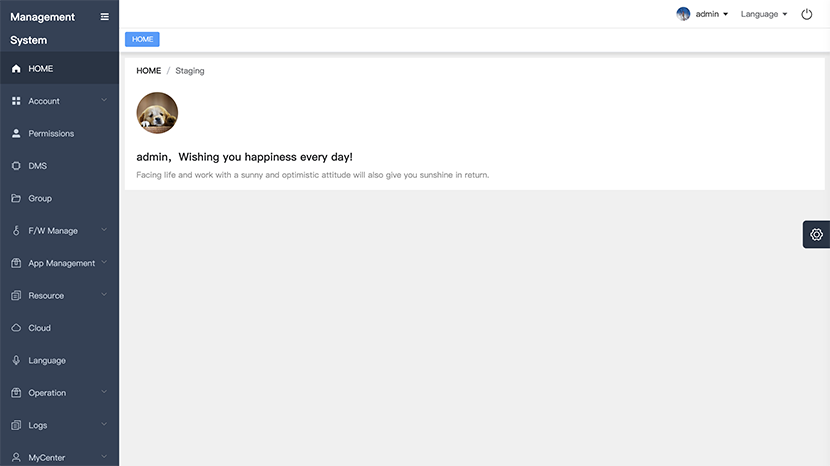
The wireless mobile APP control addresses this directly. Staff can update content from a phone or tablet — upload new videos, change welcome messages, schedule content for different times of day. A hotel can run a morning welcome loop, transition to lunch promotions, switch to conference wayfinding in the afternoon, and run evening ambiance content, all scheduled from a single app.
For multi-location properties, the same app manages displays across different buildings or floors. Content consistency across a brand becomes a five-minute check rather than a coordination effort.
Real-world applications across commercial environments
The LED front desk display fits four main use cases that share a common requirement — a premium visual statement at a high-traffic reception point:
Hotel lobbies. The primary market. Full-service hotels, boutique properties, and business hotels use curved displays for welcome branding, guest directories, event schedules, and upsell promotions. The curved form fits naturally around front desk layouts that are already curved or angled.
Corporate headquarters. Company reception areas are moving away from logo walls toward dynamic brand storytelling. A curved display at the reception desk shows corporate videos, employee milestones, visitor greetings, and live social feeds — content that changes weekly rather than sitting static for years.
Co-working spaces and serviced offices. These environments need flexible branding that adapts as tenants change. A front desk display can promote available spaces, highlight member events, and rotate through tenant branding throughout the day.
Medical and professional offices. Dental clinics, law firms, and medical suites use front desk displays for patient education, practice branding, and wait-time messaging. The silent operation and comfortable brightness levels work well in quieter environments where a loud video wall would feel out of place.
What to look for before buying
Not every curved LED display is built for front desk conditions. Here are the questions to ask before purchasing:
What is the actual weight? Some units claim portability but require two people and a dolly. A true front desk display should have integrated casters and weigh under 50kg so one person can move it behind the counter.
Is the GOB coating standard or optional? If it is optional, the base price excludes the protection that front desk environments require. Factor in the upgrade cost or move to a unit that ships with GOB as standard.
What is the real power draw? A front desk display running 16 hours a day at 138W average adds roughly $60 to $80 per year in electricity at typical commercial rates. That number should be available in the spec sheet, not buried in fine print.
Can the hotel or facility team handle module replacement? If module replacement requires a certified technician, budget for service calls. Front-access magnetic modules that the facility team can swap themselves save thousands over the display lifespan.
Bottom line
The curved LED front desk display is not a gimmick — it is a practical replacement for printed signage and flat screens in the one spot where every visitor stops. Hotels and businesses that install them report higher guest engagement, more flexible branding, and fewer content update headaches. The technology has reached a point where the specs (GOB coating, IP65, front maintenance, wireless control) match the real operating conditions of a front desk environment, not a trade show booth.
For properties still running static signage at reception, the question is not whether to upgrade, but how long printed signs will remain acceptable as the standard for first impressions.


