Beyond the A-Board: How AI-Powered LED Posters Change Retail Advertising
Walk down any busy commercial street and you will see them: A-boards outside cafés, restaurants and shops, doing the same job they did thirty years ago. They work, in the sense that they exist. They just cannot keep up with how fast the offer changes.
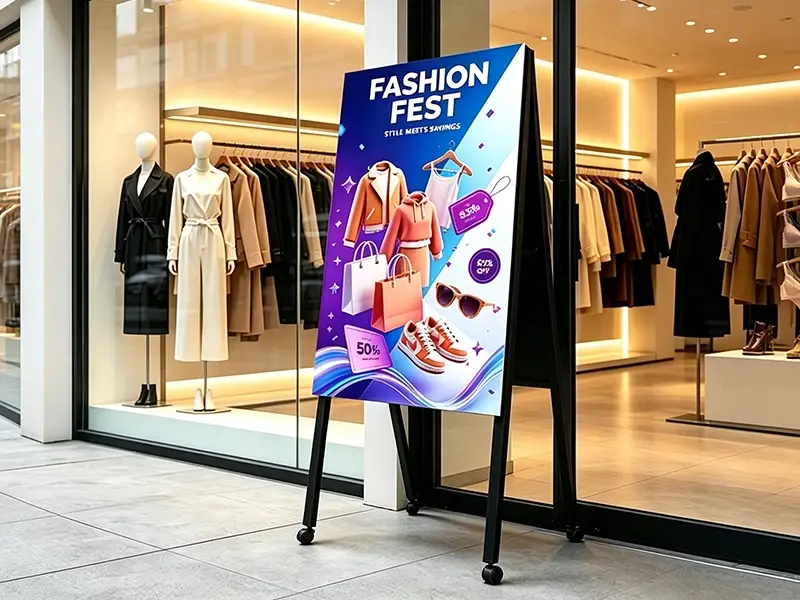
The four costs of a printed A-board
Every shop owner we speak to recognises these, because they pay them every month:
- Content cost. A new offer means a designer, a proof and a print run. By the time the board is ready, the promotion has often already finished.
- Low engagement. A static panel of paper is furniture. It does not move, it does not glow, and on a street full of movement it is the easiest thing to walk past.
- The subscription trap. The obvious upgrade is a smart screen - until the owner discovers that the basic features are gated behind a monthly SaaS fee for the life of the display.
- Fragility. Put an ordinary screen on a busy pavement and it is only a question of time before it is bumped, scratched or rained on.
What changes when the panel writes its own content
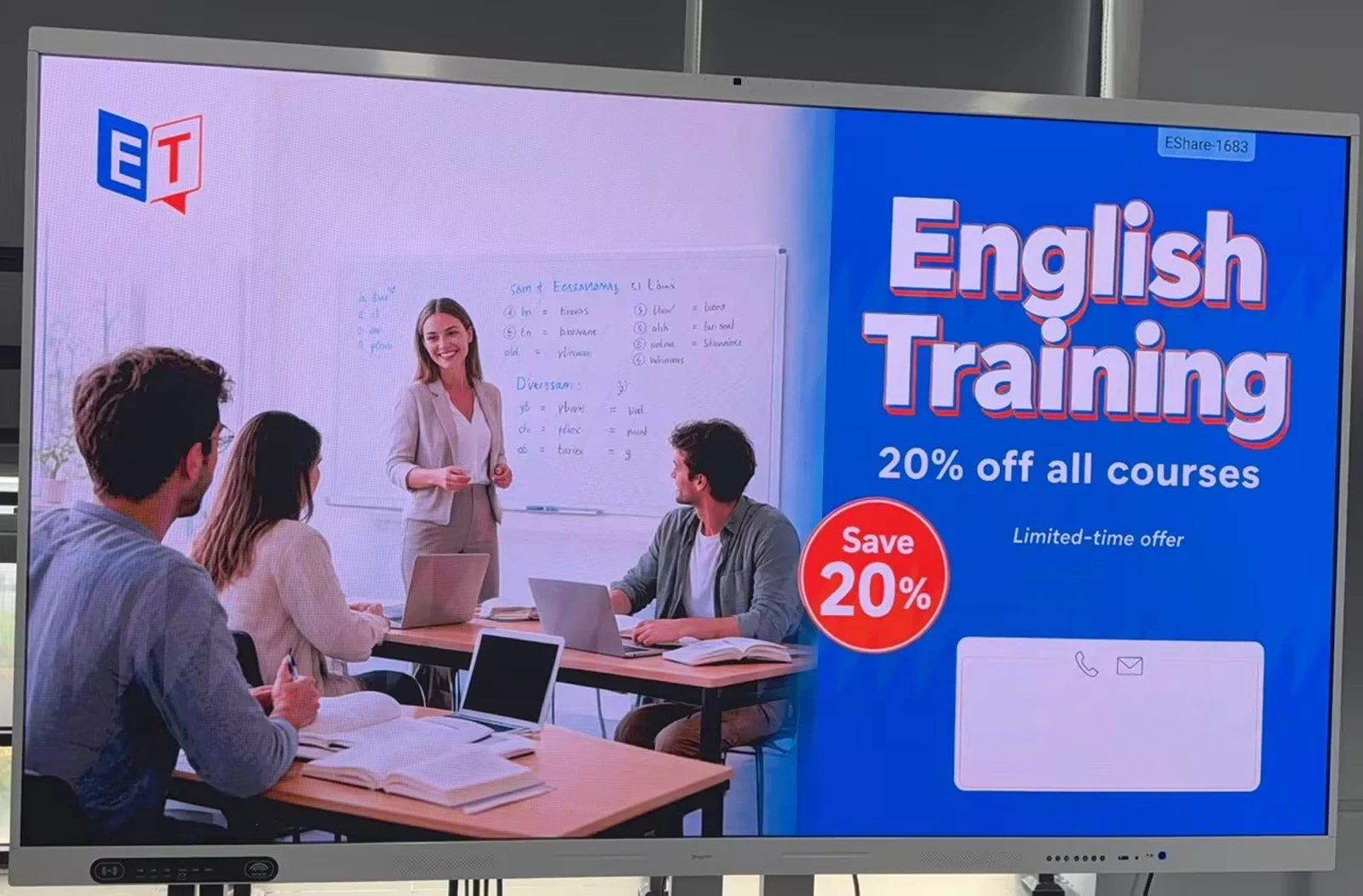
Our answer was not a brighter screen. It was to put the content production inside the display, so the person standing next to it can do the job themselves. There is a QR code printed on the frame. Scan it, speak the offer, and an AI engine generates the advertisement image or video and puts it on the panel - typically inside two minutes. If it is not right, say what to change and ask again; when it is right, say Play and it runs on the screen.
No Photoshop, no designer, no media player, no laptop. The workflow is: scan, say one sentence, say Play. For a shop that changes its lunch offer at eleven in the morning, that difference is the whole product.
Try it before you buy it
Every unit ships with a free allowance: 50 image generations and 10 video generations. That is deliberate. Nobody should have to take our word for how the output looks - the owner generates a few real advertisements for their own shop, on their own screen, and decides from what they see.
BYOK: what “bring your own key” really means
When the free allowance is used up, the owner enters their own API key - OpenAI-compatible, so it can be the model they already use or prefer - and the unit keeps working. They pay the AI provider directly for what they consume.
We want to be precise about the commercial model, because this is where digital signage usually goes wrong. There is no monthly fee from us and no lock-in to our account. The screen is bought once; the AI is paid for by usage, by the owner, at cost from their provider. If a customer later decides to change AI provider, nothing in the hardware stops them.
GOB, because this thing lives at street level
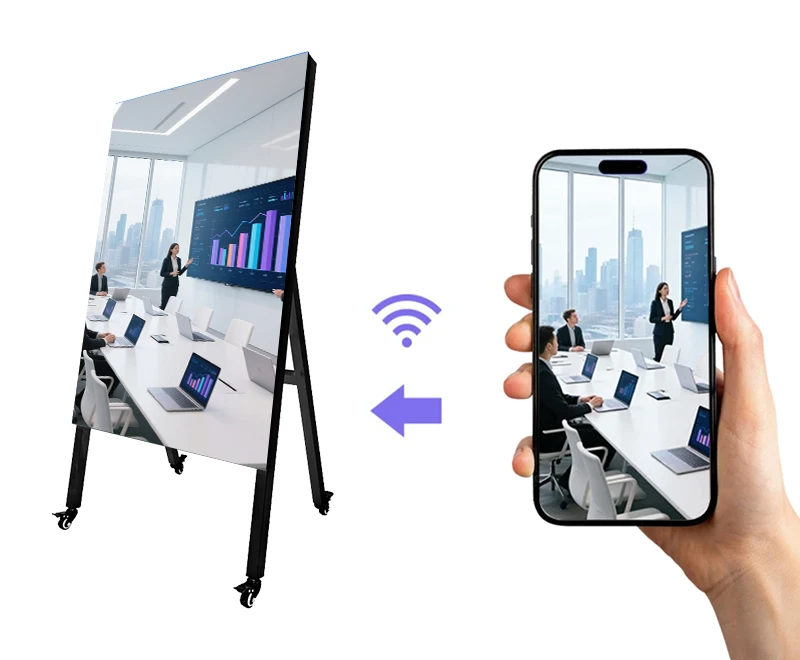
A street-level sign meets trolleys, children, cleaning crews and weather. Exposed LED lamp beads lose that fight: the first knock takes out a pixel, humidity gets into the gap, and within a year the panel looks tired.
GOB (glue-on-board) encapsulation pours a protective layer over the LED array, and the front face carries an IP5x rating - dust protected against a splash at street level. It is not a swimming-pool product, and we do not market it as one: for a fully outdoor, rain-facing installation the right unit is the IP65 outdoor A-frame poster, which is a different product for a different job.
What this unit does not do
Three honest limits, because they decide whether it is right for a given shop:
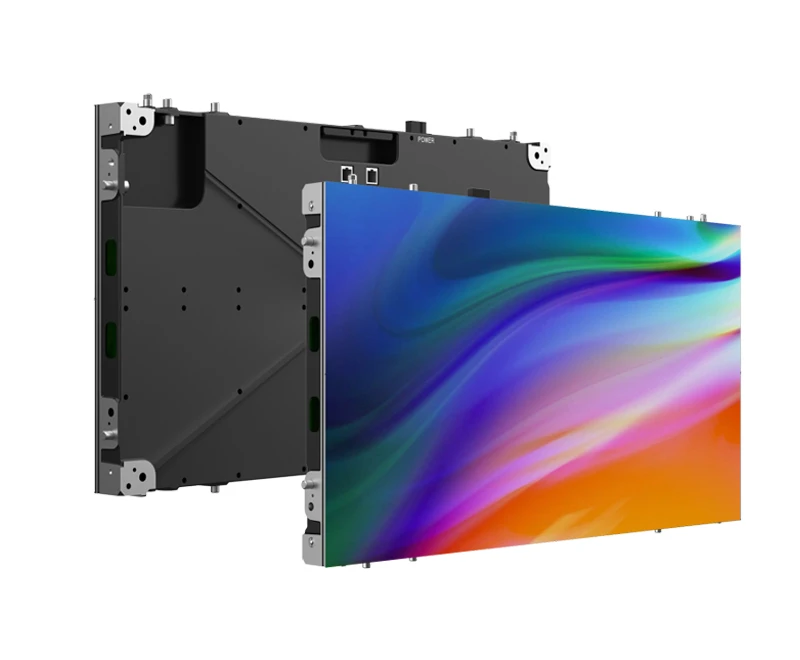
- It is not a billboard. At 1.86 mm pitch and 650 cd/m² it is built for reading distances of a few metres - a shop front, a mall aisle, a restaurant entrance. Past roughly twenty metres, a large-pitch LED wall is the correct tool.
- The AI needs a connection. Generation happens on the unit, but the model is called over WiFi. No WiFi, no new content; already-published content keeps playing.
- The quality of the output depends on the model. The unit publishes what the AI returns. A better model, or a better prompt, gives a better advertisement - which is exactly why the free allowance exists.
Where it pays for itself
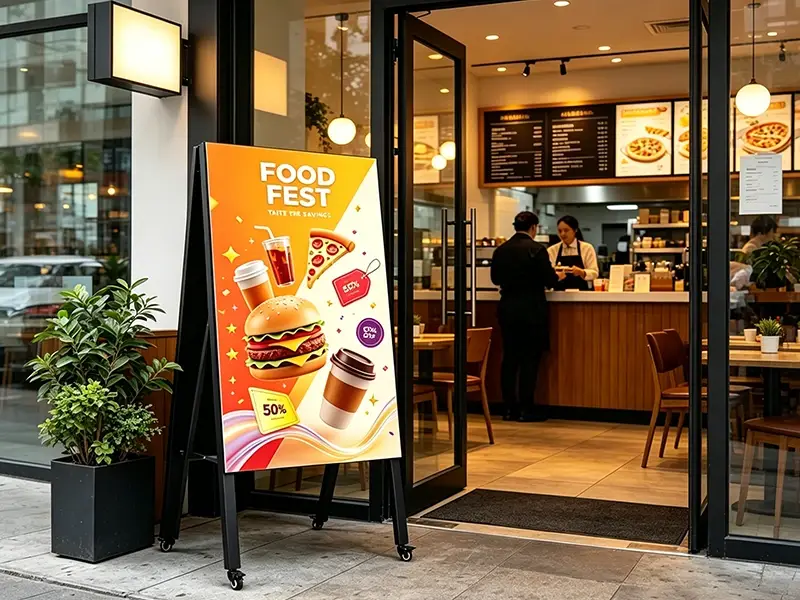
- Cafés and restaurants - the day menu, the lunch set, the sold-out items, changed before service.
- Retail windows - promote what is actually in stock today instead of what was in stock at print time.
- Mall kiosks and aisle ends - several units managed from one place, with content pushed remotely.
- Showrooms and lobbies - a moving, lit panel gets noticed where a printed stand gets dusted.
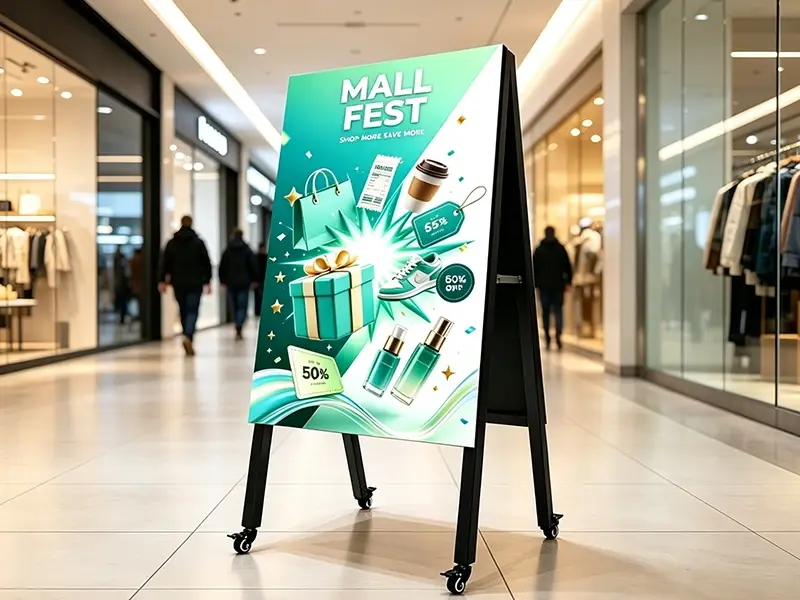
Printed A-board vs AI LED poster
| Over a year of use | AI LED poster | Printed A-board |
|---|---|---|
| Changing the message | Spoken, published in about two minutes | Design, print, deliver - days |
| Who creates the content | The shop manager, by voice | A designer or an agency |
| Cost of each change | Nothing beyond AI usage | Artwork and printing every time |
| Motion and video | Image or short video | Not possible on paper |
| Rain, dust, knocks | GOB sealed, IP5x front face | Paper and board destroyed |
| Monthly fee | None from us - the owner pays the AI provider | None, but every campaign is reprinted |
Specification summary
| Item | Value |
|---|---|
| Pixel pitch | 1.86 mm, GOB encapsulation |
| Cabinet size | 640 x 960 mm (standard unit 640 x 1920 mm, 79.7 inch diagonal) |
| Brightness | 650 cd/m² |
| Refresh rate | 3840 Hz |
| Contrast | 6000:1 |
| Cabinet weight | 18.5 kg, front maintenance |
| Protection | IP5x front face |
| Power per cabinet | Max 500 W, average 185 W |
| Lifespan | 100,000 hours |
| Content input | WiFi, QR-code voice workflow, remote publishing |
| Accessories | 3 m power cord, WiFi antenna |
The full technical sheets for the whole display range are on the specification page. For indoor applications the lighter indoor LED poster range is usually the better buy, and for a fully weatherproof street unit see the outdoor A-frame poster.
Frequently asked questions
Do I need design skills to use it?
No. The workflow is scan, say one sentence, then say Play. The AI generates the image or video from that sentence and the manager approves it on the spot. No software is installed and no design tool is opened.
How many advertisements can be generated for free?
Each unit ships with 50 free image generations and 10 free video generations. After that the owner enters their own OpenAI-compatible API key and pays the AI provider directly for what they use.
Is there a monthly subscription?
Not from us. The display is a one-off purchase and the AI is paid by usage through the owner’s own key. We do not add a monthly platform fee or a content lock-in.
Can it be used outdoors?
It is an indoor and covered-outdoor unit: GOB encapsulation and an IP5x front face handle dust, splash and knocks. For a position exposed to direct rain, use the IP65 outdoor A-frame poster instead.
How do I see it working before ordering?
Ask us for a live demo through www.riotouch.com. We publish to a real unit and send the QR code, so the customer can generate an advertisement on it before any purchase decision.
Related Product
Related Articles
WhatsApp: +86 136 3170 6721
Email: daisy@riotouch.com · Riotouch Technology