Looking for a Motorized Height-Adjustable Tilt Stand for 32", 43" or 55" Nursing Home Touch Screens? Here's What Actually Matters
If you're developing an interactive touchscreen solution for elderly care and searching for a mobile lift-and-tilt stand, you've probably already run into the same wall: most stands on the market were designed for 84-inch TVs in boardrooms, not for 32"–55" touchscreens used at a resident's bedside.
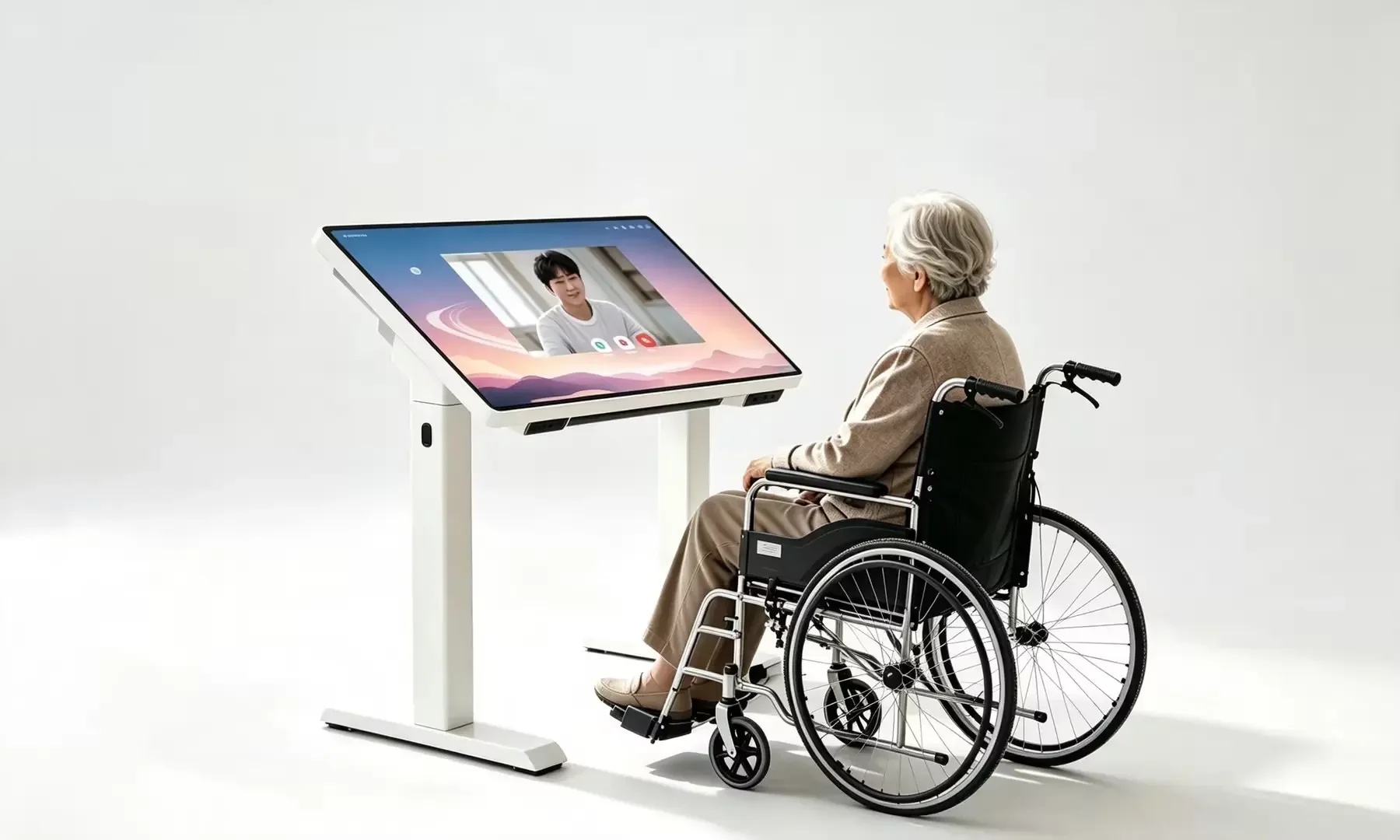
That mismatch matters more than it looks. A stand sized for an 84" TV is heavy, has a wide floor footprint, and is designed around a standing viewer — none of which fits a care-home use case where residents interact from a wheelchair or while lying down.
We've had this exact conversation twice this year, with two different European developers of senior-care touchscreen software — one in Switzerland, one in Poland. Both were searching for the same thing, and both found the market didn't have an off-the-shelf answer. Here's what we learned together.
What Buyers in This Space Are Actually Asking For
When a senior-care touchscreen developer reaches out to us, the requirement list tends to read almost like a checklist — and it's a good one, because it's been shaped by real deployments:
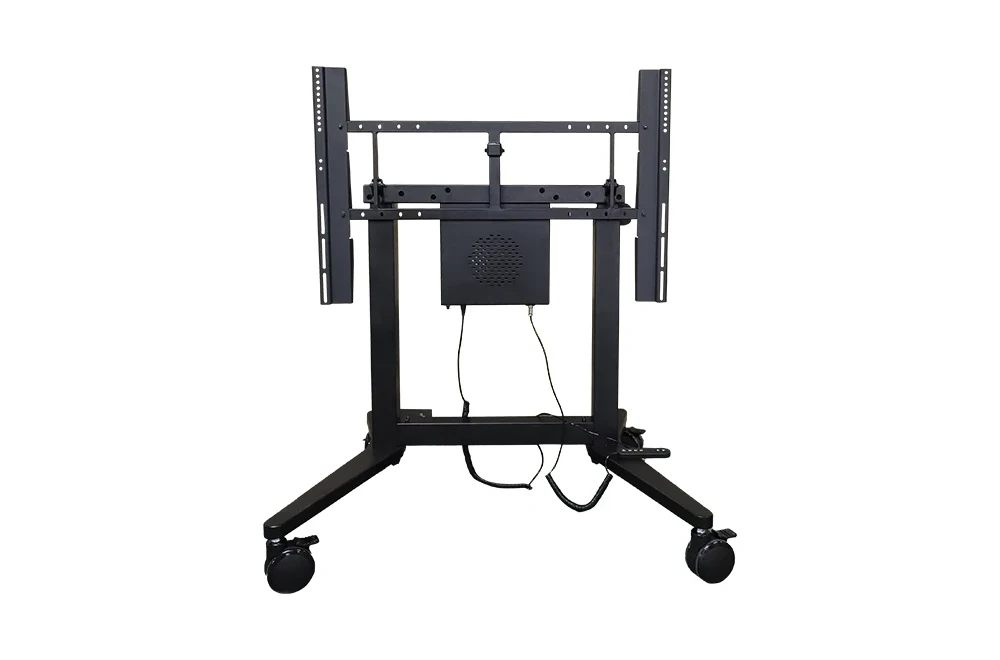
- A mobile stand with wheels and brakes — the screen needs to move between rooms and lock securely once positioned, without a caregiver needing two people to move it.
- Electric height adjustment — a simple switch, not a crank or a spring-release lever, so any staff member can adjust it safely and quickly between residents.
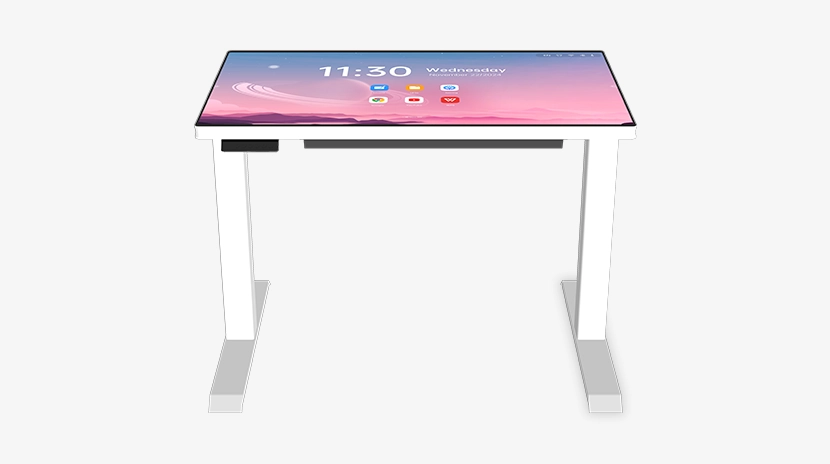
- 90° tilt to a flat, tabletop position, ideally electric — for residents who need to interact with the screen lying nearly flat rather than upright.
- If tilt is manual, it has to be simple and safe — no tools, no screws, something a caregiver can adjust one-handed without a training session.
- Stability during touch operation — a screen that wobbles when tapped is a non-starter for elderly users who may already have limited dexterity or coordination.
- A wheelchair-friendly base — critically, without a large base plate blocking access. This is the detail that's easy to miss on a general-purpose TV cart.
- Support for 32", 43", and possibly 55" screens via VESA 100×100 or a suitable adapter — often because a facility wants to standardize on one stand design.
- A CE Declaration of Conformity for the exact product/model — not a generic compliance statement, which most procurement processes in the EU/EEA won't accept.
- Confirmed spare parts supply for the motor, control box, switch, and casters — because a stand that goes into daily multi-resident use in a care home needs to be maintainable.
This is essentially the brief we've received from both the Swiss and the Polish developer, almost word for word, which tells us it's not a one-off requirement — it's the category standard.
Why a Generic TV Cart Doesn't Solve This
Most electric mobile TV carts on the market are built around one goal: hold a very large, very heavy panel steady at standing height. That means a wide footprint, heavy construction, and a design tuned for a standing viewer.
None of that lines up with a 32"–55" touchscreen program for a care home. A lighter panel doesn't need a heavy-duty base built for an 84" screen — it needs an open, accessible base, lower minimum height, and tilt capability that standard carts simply don't offer.
This is really a product category gap: the stand exists in pieces (motorized columns, tilt brackets, locking casters are all mature, well-understood components), but nobody has put them together into the right configuration for senior care.
What This Means for the Stand Spec
Based on both the Swiss and Polish requirement lists, and on what we know about VESA mounting and motorized column design for this screen size range, the spec that matters is:
- Base and wheelchair access. An open, low-profile base — an "H-frame" or cantilevered foot design — rather than a solid plate, so a wheelchair's footrests can get close to the screen.
- Height adjustment. Fully electric, via a simple up/down switch or paddle — no crank handles, no tools. This is as much a staff-safety issue as a convenience one.
- Tilt to a 90° tabletop position. Ideally motorized, using the same controller as the height adjustment, so a caregiver can bring the screen from standing to flat in one smooth motion.
- VESA compatibility and screen size range. VESA 100×100 as standard, with adapter plates for other patterns, so one column and base can support 32", 43" and 55" screens.
- Documentation. A CE Declaration of Conformity specific to the exact product/model, not a generic compliance statement — this is what EU/EEA procurement actually reviews.
- Spare parts. Confirmed ongoing supply for the motor, control box, switch/paddle, and casters. A stand going into daily, multi-resident use in a care home is a maintenance asset, not a disposable.
What We're Building Our Recommendations Around
Here's the baseline spec we now use when a developer or dealer comes to us with this kind of project:
- Open, wheelchair-accessible base — no solid plate that blocks footrests or close approach
- Locking casters for secure parking
- Fully electric height adjustment via simple switch control, rated for daily multi-user cycling
- Tilt to a flat 90° position, ideally motorized; if manual, tool-free and single-hand operable
- Compatible with 32", 43", and 55" screens via VESA 100×100 with adapter support
- Model-specific CE Declaration of Conformity, not a generic statement
- Confirmed spare parts supply for motor, control box, switch, and wheels
If you're developing a touchscreen program for elderly care, rehabilitation, or memory care and you've hit the same wall we keep hearing about — every stand is either too big, too heavy, or missing tilt — this is exactly the conversation we should have.
Related Product
Need a Solution That
Fits Your Project?
Tell us what you're looking for and we'll tailor a quote to your requirements — with pricing, lead time, and expert advice.