LED Poster Display: What P1.86 GOB Actually Changes on a Shop Floor
Most LED poster pages list the same eight words: fine pitch, high brightness, wide viewing angle, seamless. None of them tell you whether the thing will still look expensive after two years of customers walking past it, resting shopping bags against it, and someone changing the artwork every fortnight.
This article takes one specific product — a single-cabinet P1.86 GOB indoor LED poster, 640 × 960 mm of screen — and goes through what each number on the datasheet actually decides. Where the sheet is silent, I say so, because those gaps are where projects go wrong.
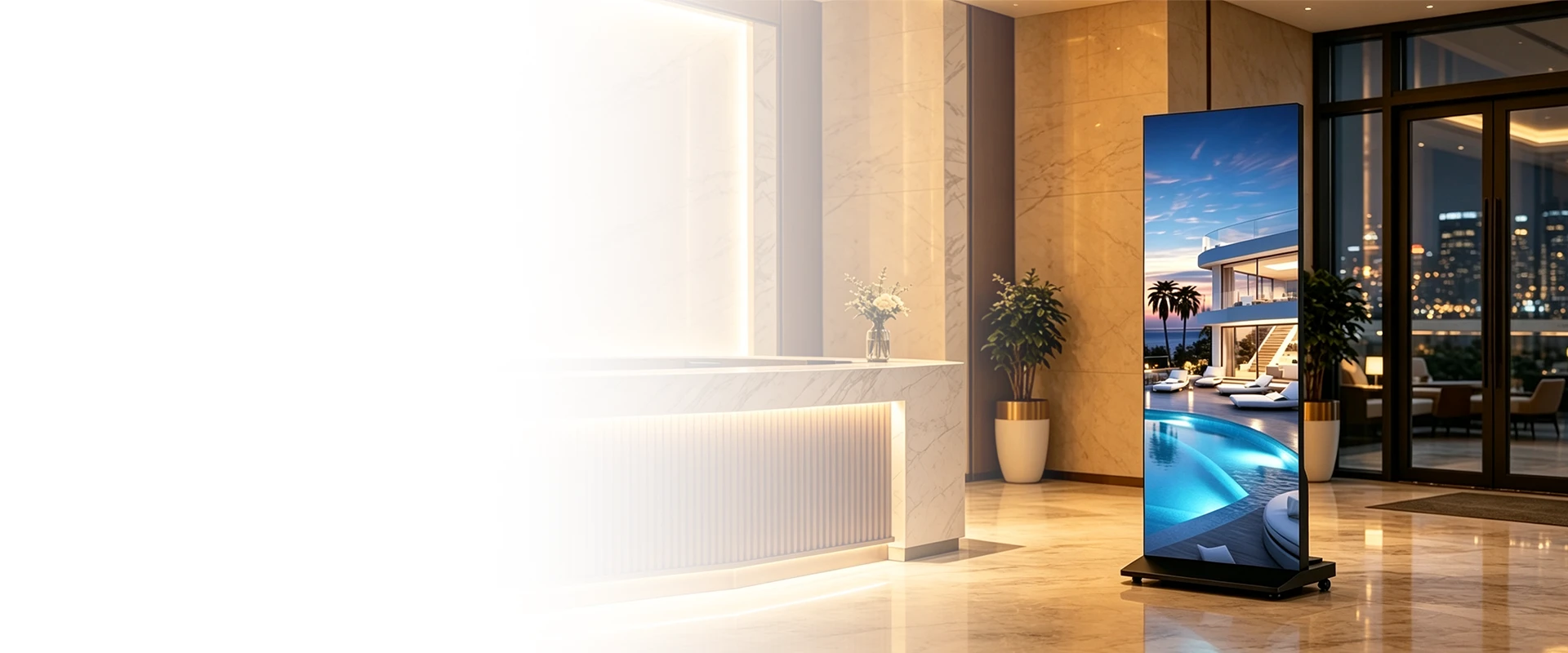
1. What the product actually is
One steel cabinet, 640 mm wide and 960 mm tall, 0.6144 m² of display area, built from twelve LED modules arranged two across and six down. The cabinet face carries 344 × 516 pixels. It stands on the floor, either on its own base or bolted to a wall through a VESA pattern — the sheet lists both "VESA wall mount" and "standard fixed install" as supported.
Two details decide whether it fits your space, and neither is cosmetic:
- Front maintenance. Modules come out from the front, so the cabinet can sit almost flush against a wall or inside a joinery pocket. Rear-service cabinets need 500 mm of clearance behind them, which on a shop floor is usually space you do not have.
- HUB75 without a cascade port. This cabinet is a standalone unit. It cannot be daisy-chained to a second cabinet to build a wider surface. If you were planning "buy two and put them together", that plan belongs to the splicing series, not to this product.
In the box: a 3 m power cord and a WiFi antenna. That is the complete accessory list — no wall bracket, no floor base unless you specify it, no media player beyond what is built into the cabinet.
2. The numbers that decide whether it works
| Specification | Value | What it decides in practice |
|---|---|---|
| Pixel pitch | P1.86 mm | Sharp from about 2 m; individual lamps become visible closer than 1 m |
| Cabinet size | 640 × 960 mm (0.6144 m²) | Portrait 2:3. Roughly the footprint of a printed roll-up standee, at the same height |
| Cabinet resolution | 344 × 516 dots | Design artwork at this size or larger, not at 1080 × 1920 and hope |
| Brightness | 650 cd/m² | Brighter than most LCD standees; comfortable in lit interiors, not a window-facing sunlight unit |
| Refresh rate | 3,840 Hz | No banding when a customer films the screen with a phone |
| Contrast | 6,000:1 | Deep black background; a black poster really is black, so artwork does not look grey |
| Colour temperature | 6,500–12,000 K | Adjustable; match the shop lighting rather than fighting it |
| Lamp type | SMD1515, 1R1G1B, 288,906 dots/m² | Standard indoor packaging, replaceable at module level |
| Surface protection | GOB coated lamp beads | Glue over the LEDs: collision, dust and oxidation protection |
| Ingress rating | IP5x, front face | Dust protected. Water is not rated — indoor product |
| Rated life | 100,000 hours | About 11 years at 24/7. Brightness decays gradually; it does not fail on a date |
| Working temperature | −10 to 45 °C | Indoor environments. A glass shopfront in direct sun exceeds this |
| Power consumption | Not published | Ask per configuration before sizing electrical points |
| Weight | Not published | Ask before specifying a wall bracket or a raised floor |
3. GOB: what it protects, and what it does not
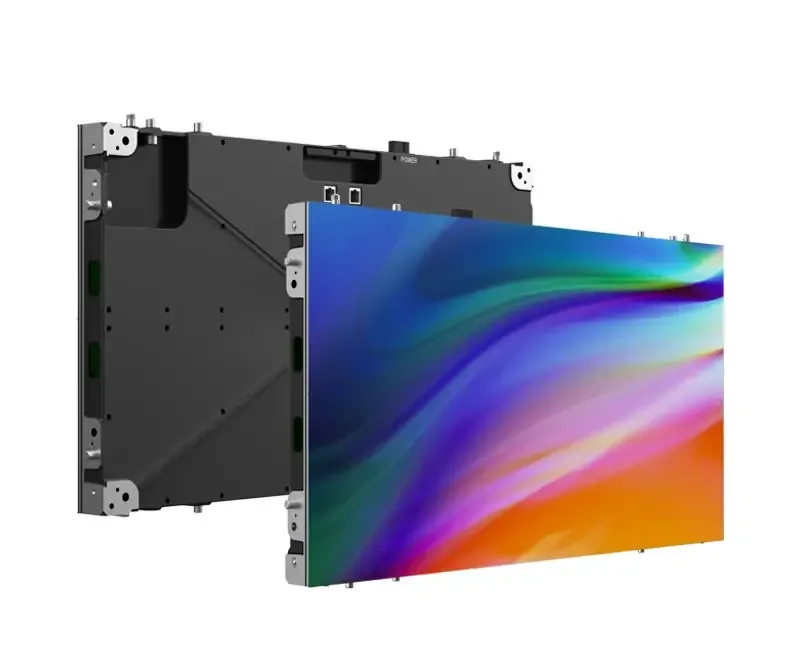
GOB stands for glue on board. After the SMD1515 lamps are soldered onto the module, a layer of silicone is applied over the whole surface and cured, so the lamp beads sit under a continuous coating instead of standing bare.
That buys you three things a shop actually notices. A shopping bag dragged across the face does not shear off a lamp. Cleaning is a wipe, not a careful dusting. And the solder joints are sealed from humidity, which is the failure mode that kills bare-lamp modules in coastal cities.
What GOB does not do is make the product waterproof. The rating is IP5x on the front only: the 5 means dust protected, the x means water is not rated. Do not pressure-wash it, do not put it in a doorway where rain reaches it, and do not accept a quotation that describes this cabinet as IP65. If your position is genuinely semi-outdoor, the conversation changes to the sealed IP65 outdoor poster, which is a different cabinet with a different price.
4. 650 nits: the honest number
650 cd/m² is roughly double a typical indoor LCD standee and about half what an outdoor unit needs. In a lit shop, a mall corridor or a hotel lobby it reads clearly from 5–6 m, which is further than anyone stands to read a poster.
It is not enough for two situations, and it is better to say so early. First, a position straight in front of a shopfront window with afternoon sun coming through: ambient light there runs to thousands of lux and the screen will look washed out for part of the day. Second, an unshaded outdoor position, where the requirement starts around 3,000–5,000 nits and the cabinet has to be sealed.
The practical test costs nothing: stand at the intended position at the intended hour, hold a phone at full brightness and look at it. If your phone screen is hard to read, the poster will be too.
5. 3,840 Hz: the number buyers forget
Refresh rate is not about smooth motion — at 60 Hz frame rate this is a poster, not a video wall. It is about cameras. A low-refresh LED panel shows dark horizontal bands when filmed, and in 2026 nearly every customer who likes your display will film it before they buy. A 3,840 Hz panel films clean on a phone; a 1,920 Hz panel usually does not.
This is the single specification most worth insisting on if you sell to retail chains, because the failure is not visible in the showroom and is very visible on the customer's Instagram story.
6. The cost comparison that actually decides the purchase
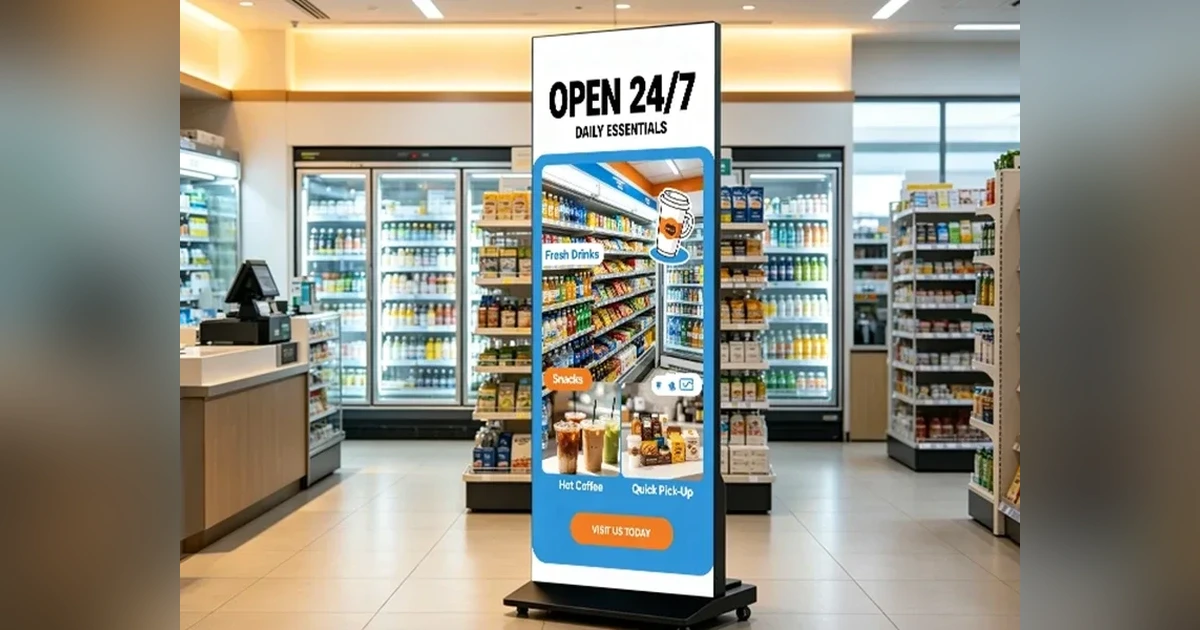
Nobody replaces a printed standee because LED is brighter. They replace it because the printing invoice keeps arriving. So run the arithmetic on your own numbers rather than on a brochure:
Break-even changes = (poster price − standee price) ÷ (print cost + install labour per change)
If a shop currently reprints four times a year at a cost of P per change including labour and disposal, an LED poster pays for itself after a fixed number of changes, and every change after that is free. The number that matters in the sales conversation is not the price of the screen; it is how often the message changes. A pharmacy with weekly promotions reaches break-even far sooner than a hotel with a static brand image — and for the hotel, the argument may not be cost at all, but the fact that a black background and a moving image cannot be printed.
One honest caveat: an LED poster is electronics. It has a driver, a receiving card and a power supply, and those can fail. Budget for a spare module and a receiving card per batch of units, which is cheap, rather than discovering the need when one screen goes dark.
7. Four things to settle before you order
- Who publishes the content? Remote publishing is supported, but somebody has to own the account, the artwork sizes (344 × 516 design grid) and the schedule. Name that person before the order, not after installation.
- Network at every position. A WiFi antenna ships in the box; a stable access point does not. If the poster is going into a mall corridor, confirm coverage at that spot, or plan a LAN drop.
- Electrical points. Power draw is configuration-dependent, so ask for it per unit and have the socket and circuit planned. Six posters is a small electrical design, not six phone chargers.
- Floor or wall. The base and the VESA bracket are separate items. A wall-mounted cabinet needs structure behind the plasterboard, and a floor-standing one needs the floor to be level or it will look crooked forever.
8. Frequently asked questions
Is P1.86 sharp enough to read from one metre away?
At 1.86 mm pitch the cabinet carries 344 × 516 pixels. Body copy is comfortable from about 2 m and sharp from 3 m; closer than 1 m you begin to see the lamps, which matters if you plan to place prices or QR codes at knee height.
What is the difference between this poster and the foldable one?
The same P1.86 GOB surface in a different cabinet. This one is a single rigid 640 × 960 mm cabinet meant to stay where it is installed; the foldable version hinges into panels for transport. Permanent installation, rigid. Rental or travelling display, foldable.
Can I join two of these to make a wider screen?
No. The HUB75 interface here has no cascade port, so the cabinet runs standalone. A wider surface is the splicing series, where cabinets are designed to be driven as one canvas.
Does IP5x mean I can put it outdoors?
No. The 5 covers dust on the front face; the x means water is not rated. Indoor product. Genuine outdoor positions need IP65 and a sealed cabinet.
Can content be updated remotely?
Yes — remote publishing is supported, over WiFi (antenna included) or LAN, through a content account. What it does not do is run itself: assign an owner for content.
What is the power consumption and weight?
Neither is fixed on the datasheet because both move with brightness setting, driver configuration and module count. Ask for the figures of the exact configuration before you size electrical points or specify a bracket.
Need a P1.86 GOB poster priced for your position?
Send the position, the quantity and how often the artwork changes. You get the configuration, the power figure for it, and a delivered price — one number, no surprises at the port.
See the LED Poster Display →Related Product
LED Poster Display
Single-cabinet indoor LED poster, P1.25–P2.5, GOB coated, front maintenance.
View Product →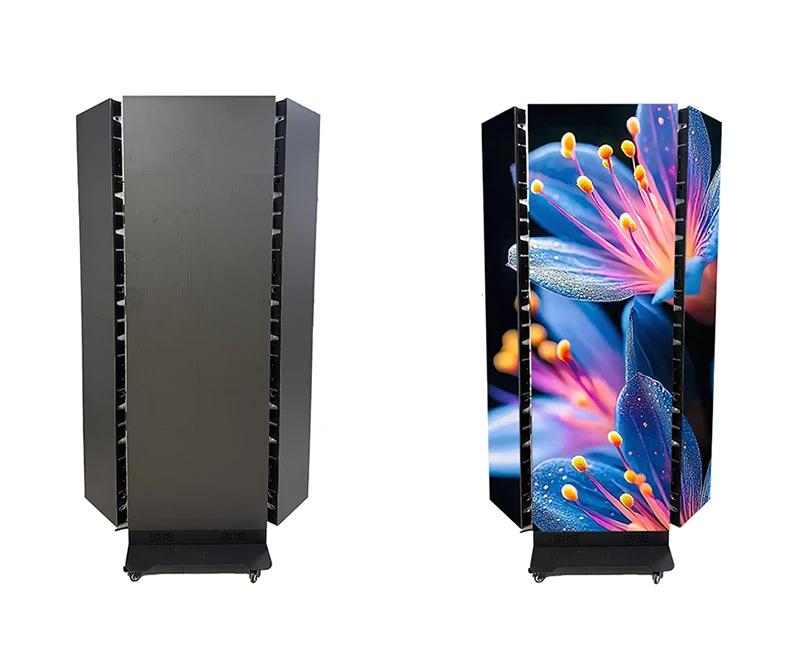
Foldable LED Poster
Hinged panels that fold flat for transport and rental use, same GOB surface.
View Product →